Preserving the Story Behind the Stone: How a Bridal Jewelry Archive Transforms Your Pieces Into Lasting Heirlooms
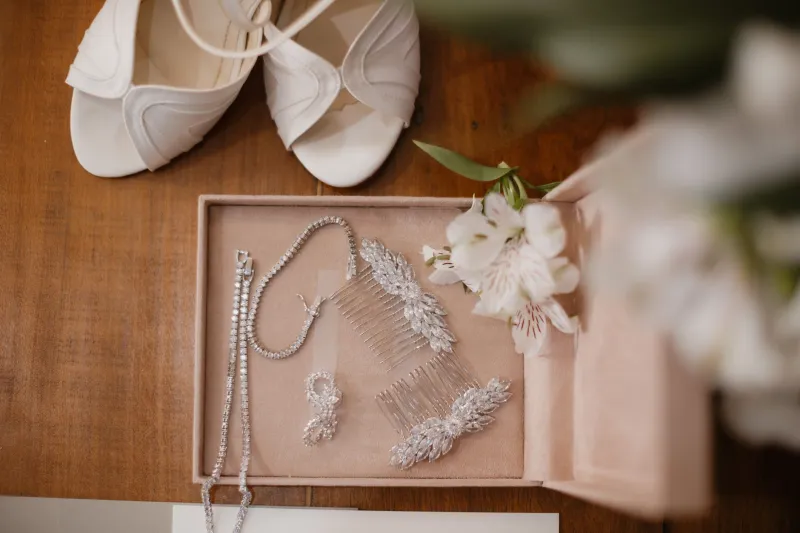
There is a particular kind of silence that settles over a jewelry box when the wedding day has passed. The engagement ring that once commanded every room now rests quietly beside a wedding band, both of them gleaming with a history that only you and your partner fully understand. The question every couple eventually faces—though few think to ask it while the celebration is still fresh—is this: What happens to that story when you are no longer here to tell it?
The answer, for couples who think carefully about legacy, lies not only in the pieces themselves but in the record they leave behind. A bridal jewelry archive is not a bureaucratic exercise. It is an act of love extended forward in time.
Why Documentation Is an Act of Preservation, Not Paperwork
Fine jewelry is among the most durable objects a family can own. A well-crafted platinum setting can outlast several generations without significant wear. A diamond, by its very nature, is nearly indestructible. Yet the stories attached to these objects are fragile in ways the metal and stone are not.
Without documentation, even the most meaningful piece can become anonymous within two generations. A granddaughter may hold her grandmother's engagement ring and feel its weight, admire its craftsmanship, and sense that it carries significance—but without a record, she cannot know the jeweler who shaped it, the year it was commissioned, the conversation that led to its specific design, or the stone's origin. The emotional inheritance is diminished, even when the physical object survives intact.
Documentation closes that gap. It gives future generations not just an object but a context—a way of understanding why this particular ring, in this particular style, with this particular stone, mattered to the people who chose it.
The Four Pillars of a Comprehensive Jewelry Archive
A complete bridal jewelry archive rests on four distinct forms of documentation, each serving a different purpose and reaching a different kind of future reader.
Professional Photography
The most immediate layer of documentation is visual. Professional jewelry photography—distinct from the portraits taken on your wedding day—captures the technical details that casual photographs miss: the profile of a setting, the facet structure of a center stone, the engraving on the interior of a band, the texture of a hand-fabricated surface.
Consider commissioning a dedicated jewelry shoot before your wedding day, when the pieces are at their most pristine. A skilled photographer working in macro will produce images that function both as art and as record. These photographs should be stored in at least two formats: printed archival copies kept with the pieces themselves, and high-resolution digital files stored in a cloud-based system that your family can access.
If your jeweler offers professional documentation photography as part of a custom design process—as many fine bridal boutiques do—take full advantage of it. The resulting images will be technically superior to anything captured on a smartphone, and they will serve your archive for decades.
Gemological Certification and Appraisal
Certification documents from recognized gemological laboratories—the Gemological Institute of America being the most widely referenced in the United States—provide an objective, technical record of your center stone's characteristics. These certificates document the cut grade, color, clarity, carat weight, and any identifying features of the stone, and they serve a dual purpose: they support insurance claims in the event of loss or damage, and they provide future generations with verifiable provenance.
Beyond certification, a formal appraisal from a credentialed appraiser assigns a replacement value to each piece. Appraisals should be updated every three to five years, as market conditions affect valuations, and each updated appraisal should be added to the archive rather than replacing the previous one. The progression of valuations over time becomes its own kind of historical record.
Written Narrative
This is the layer of documentation that most couples overlook, and it is arguably the most irreplaceable. A written narrative accompanying each piece captures what no certificate or photograph can: the human story.
For your engagement ring, consider writing a brief account—even a single page—that describes how the design came to be. Where did you begin? What inspired the choice of stone? Did the setting draw from a family tradition, a shared aesthetic, or a moment of creative discovery with your jeweler? Was there a stone sourced from a particular mine or a family piece that was melted down and recast? These details are precisely what future generations will hunger for, and they exist nowhere else.
For wedding bands, the narrative might focus on the decision-making process: why you chose matching sets or deliberately different designs, what the engraving means, whether the metal choice held symbolic weight. Even a few paragraphs, written in your own voice, will make these objects speak across time in a way that no appraisal document can replicate.
A Maintenance and Provenance Log
The fourth pillar is ongoing rather than one-time: a log that records every professional cleaning, repair, resizing, or restoration the pieces undergo throughout their life. Each entry should include the date, the name of the jeweler or workshop, and a brief description of the work performed.
This log accomplishes several things simultaneously. It documents the care a piece has received, which speaks to its condition and any alterations made over time. It creates a chain of custodianship—a record of who has touched and tended these objects across generations. And it provides any future jeweler who works on the piece with a complete history, enabling more informed and respectful care.
Where to Keep Your Archive
The physical components of your archive—certificates, appraisals, photographs, written narratives, and maintenance logs—deserve a dedicated home. A fireproof document box kept with your estate planning materials is a sensible choice. Many couples also include their jewelry archive alongside their wills and trust documents, ensuring that the pieces and their stories are transferred together.
For digital components, consider a cloud storage folder shared with a trusted family member, organized clearly so that any future heir can locate and understand its contents without assistance. Label everything plainly. The goal is accessibility across time, not elegance of organization.
The Emotional Return on a Modest Investment
Creating a jewelry archive requires an investment of time rather than significant expense. The photography session, the appraisal, and the hour spent writing a narrative together represent, in total, a small fraction of what most couples invest in the pieces themselves. Yet the return—measured not in dollars but in meaning preserved and stories transmitted—is disproportionately large.
At Sonia Jewellery & Bridal, we work with couples who understand that the jewelry they commission is not simply an accessory for a single day. It is the beginning of a material legacy, a tangible record of love at a specific moment in time. The archive is how that moment continues to speak.
Your wedding day will pass. The photographs will fade slightly, the memories will soften at their edges, and the voices that can speak to what those pieces meant will eventually grow quiet. But a well-kept archive ensures that the story does not end when the voices do. It simply waits, patient and complete, for the next generation to open the box and begin reading.