The Quiet Season Before the Design: How the Months After Your Engagement Shape Everything That Follows

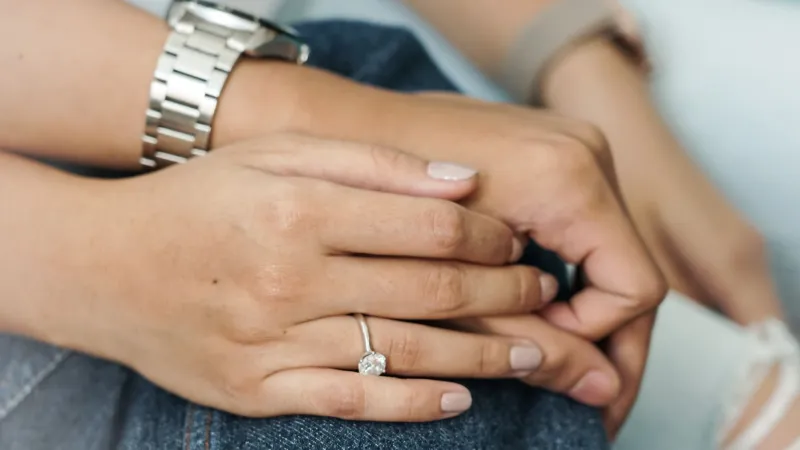
There is a particular kind of excitement that follows an engagement—one that is equal parts joy, anticipation, and urgency. The ring is on your finger, the photographs have been shared, and almost immediately, well-meaning voices begin asking: Have you chosen your wedding band yet? Are you working with a designer? The pressure to move quickly can feel like its own kind of momentum, carrying you forward before you have had a chance to simply be present in the moment.
But here at Sonia Jewellery & Bridal, we have observed something quietly consistent across the couples who arrive at their final pieces with the deepest satisfaction: they did not rush. They used the time between their engagement and their first design consultation as something more than a waiting period. They used it as a season of discovery.
Why This Window Is More Valuable Than It Appears
The months between your engagement and the beginning of your bridal jewelry design process carry a significance that is easy to underestimate. On the surface, it may look like nothing is happening. You are not yet selecting metals or discussing stone shapes. You have not yet committed to a silhouette or a setting style. But beneath that apparent stillness, something essential is taking shape: your vision.
Couples who enter a design consultation without having done this interior work tend to experience a predictable set of challenges. They feel overwhelmed by options. They struggle to articulate preferences. They find themselves pulled between competing influences—a sister's opinion, a trend they saw on social media, a style that photographs beautifully but does not feel personal. The result is often a piece that is lovely in the abstract but somehow disconnected from the story it was meant to tell.
Conversely, couples who have spent time in genuine reflection arrive knowing not just what they like, but why they like it. That distinction transforms a design consultation from a daunting exercise in decision-making into a focused, collaborative conversation.
The Practice of Looking Without Buying
One of the most valuable things you can do in the months following your engagement is to look at jewelry with curiosity rather than commitment. Visit boutiques without the intention of purchasing. Browse design archives and estate collections. Pay attention to what draws your eye repeatedly—not what you think you should want, but what consistently stops you mid-scroll.
This kind of unhurried observation builds what designers often call visual vocabulary: the ability to describe your aesthetic in terms that are specific enough to be actionable. Rather than arriving at a consultation and saying, "I want something elegant," you might instead say, "I am drawn to low-profile settings with architectural lines and a sense of restraint—nothing that catches on fabric, nothing that feels heavy." That level of specificity is only possible when you have given yourself time to look, compare, and reflect.
Keep a private collection of images—a digital folder or a dedicated board—that you return to and edit over time. Notice which pieces you remove as your eye becomes more refined. The ones that remain are telling you something important.
Aligning as a Couple Before You Align With a Designer
Bridal jewelry is rarely a solo endeavor, and the period between engagement and design consultation is an ideal time for couples to have conversations they might otherwise skip in the rush toward decisions. These are not transactional conversations about budgets and timelines, though those matter too. They are deeper exchanges about meaning.
What do you each hope these pieces will represent? Is there a family heirloom that deserves a place in the design? Are there values—ethical sourcing, environmental responsibility, cultural heritage—that should guide your choices? What does legacy mean to your family, and how might that be honored in the metals and stones you select?
These conversations are not always easy, and they rarely happen in a single sitting. But couples who have navigated them before their first consultation arrive as a unified team rather than two individuals with potentially divergent instincts. A skilled designer can work with a couple who disagrees on details. It is far more difficult to work with a couple who has not yet discovered that they disagree at all.
Budgeting With Clarity Rather Than Assumption
The financial dimension of bridal jewelry is one of the areas most prone to avoidance. Many couples enter consultations with only a vague sense of what they are prepared to spend, hoping that the right piece will somehow announce its own affordability. It rarely works that way.
The quiet months after your engagement are the right time to have an honest, private conversation about your bridal jewelry budget—not as a ceiling that limits your imagination, but as a framework that focuses it. Understanding what you are genuinely comfortable allocating across your engagement ring, wedding bands, and any additional bridal pieces allows you to enter a consultation with confidence rather than anxiety.
It also allows you to make more nuanced decisions. A couple who knows their overall budget can weigh trade-offs thoughtfully: perhaps a more intricate setting in a lower-carat gold, or a laboratory-grown center stone that allows for a more elaborate surrounding design. These are not compromises—they are choices, and they feel entirely different when they are made from a position of informed intention.
Resisting the Pressure to Perform Progress
There is a particular social pressure that surrounds engaged couples in the United States—a cultural expectation that the period of engagement should be visibly productive. Venue tours, vendor bookings, dress appointments, invitation designs. In the midst of all this documented momentum, the absence of a completed jewelry decision can feel like falling behind.
Resist that narrative. The bridal jewelry you commission or select will outlast your wedding day by decades. It will pass through your hands and, with intention, into the hands of those who come after you. The velocity of your planning calendar is entirely irrelevant to the quality of that outcome.
At Sonia Jewellery & Bridal, we believe that love becomes a legacy not through speed, but through care. The couples who honor the quiet season before their design process—who use that time to observe, reflect, align, and prepare—arrive at their consultations ready to create something that is genuinely, irreducibly theirs.
When You Are Ready to Begin
There is no universal timeline for when the quiet season should end and the design process should begin. Some couples need six weeks. Others need six months. What matters is not the duration but the quality of the preparation.
You will know you are ready when you can speak about your vision with some degree of specificity, when you and your partner have had the conversations that needed to happen, and when you feel curiosity rather than anxiety at the prospect of sitting across from a designer and beginning.
That moment—unhurried, informed, and genuinely ready—is exactly where the most enduring jewelry stories begin.