Designed for You, Not Just for Then: Choosing Bridal Jewelry That Belongs to You Beyond Any Single Chapter
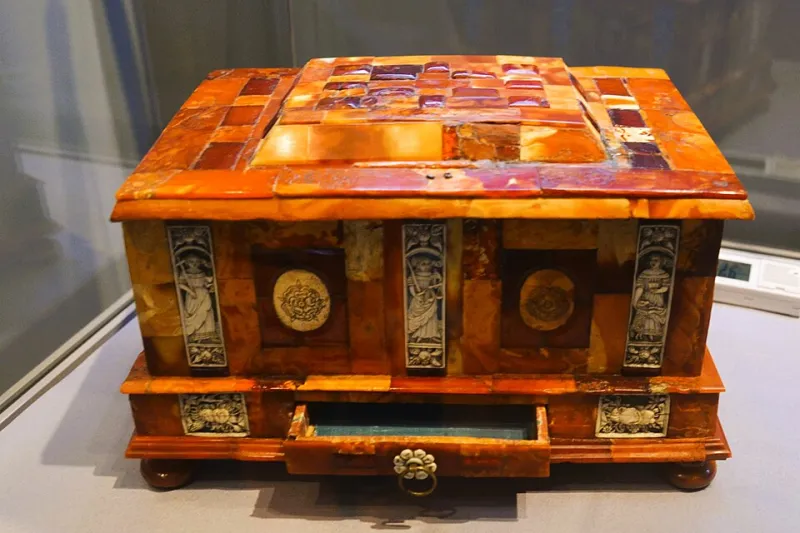
Photo: Silar, CC BY-SA 4.0, via Wikimedia Commons
There is a particular kind of courage required to think clearly in the middle of joy. When the ring is new and the wedding feels imminent and the future seems to unfold in a single, luminous direction, the last thing most couples want to consider is the possibility that life will not always look the way it looks right now. And yet the most thoughtful bridal jewelry decisions — the ones that age well in every sense of the word — are made by people who loved deeply and also thought carefully.
This is not a conversation about pessimism. It is a conversation about ownership: what it means to commission or select a piece of jewelry that belongs to you, fully and permanently, regardless of what the years may bring.
The Difference Between Marital Symbolism and Personal Significance
Bridal jewelry has long been understood through the language of partnership. The engagement ring marks a promise. The wedding band seals a covenant. These are not merely cultural conventions — they carry genuine emotional weight, and that weight is worth honoring. But there is a meaningful distinction between a piece that commemorates a relationship and a piece that belongs to an individual.
When a woman commissions a custom engagement ring, she is not simply selecting a symbol of her future marriage. She is choosing a wearable object that will rest on her hand through decades of experience — through professional milestones, through the raising of children, through loss and reinvention and quiet ordinary mornings that accumulate into a life. The most enduring pieces are designed with that full arc in mind.
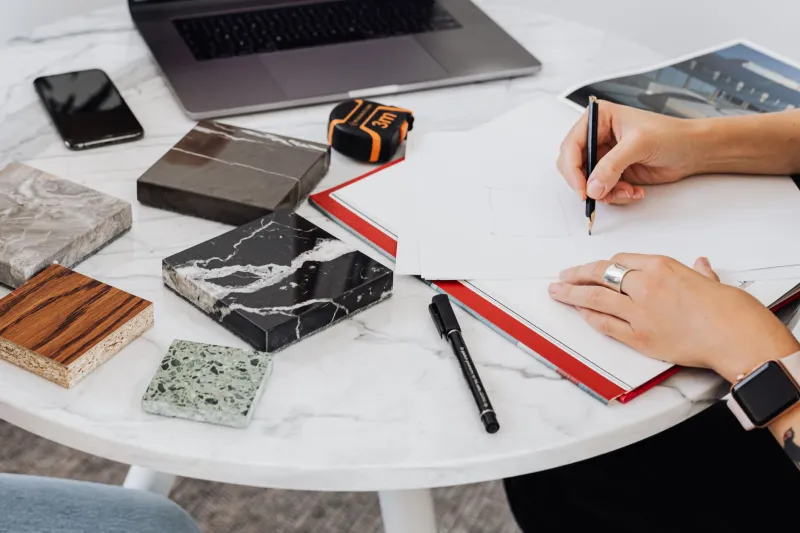
At Sonia Jewellery & Bridal, the custom design process begins with questions that go beyond aesthetic preference. What stones carry personal resonance for you, independent of trend or tradition? What metal feels most natural against your skin and your lifestyle? What silhouette would you choose if you were designing this piece for yourself alone, with no audience and no expectation? These questions are not incidental — they are foundational, because the answers produce jewelry that will feel right on your hand long after the wedding photographs have been framed.
Intrinsic Value as a Form of Foresight
Fine jewelry has always occupied a unique position among personal possessions: it is simultaneously decorative and substantive. A well-chosen diamond, a responsibly sourced sapphire, a setting crafted in platinum or solid gold — these are not merely beautiful. They represent stored value in a form that is portable, durable, and remarkably versatile across time.
Engaged couples who think carefully about the intrinsic value of their bridal pieces are not being unromantic. They are being responsible. A center stone selected for its quality — its cut, its clarity, its carat weight — retains significance whether it remains in its original setting or is eventually reimagined into something new. A well-constructed band does not diminish in craftsmanship simply because the context of its wearing changes.
This is particularly worth considering when approaching custom design. The choices made at the design stage — the quality of materials, the precision of construction, the timelessness of the silhouette — determine not only how a piece looks on the wedding day but how it holds up, in every sense, across the years that follow.
When Reimagining Becomes an Act of Continuity
One of the quieter truths of the jewelry world is that stones outlast settings, and settings outlast circumstances. Throughout history, fine jewelry has been adapted, reset, and reimagined by generation after generation — not as an erasure of the past, but as an affirmation that beauty and meaning can evolve without being destroyed.
For some women, a piece originally worn as an engagement ring eventually finds new life as a right-hand ring, a pendant, or a component in a more elaborate custom design. For others, the original setting remains untouched but the significance it carries shifts — from a symbol of a partnership to a symbol of resilience, or of self-possession, or of a particular season of life that was formative even if it did not last forever.
None of these outcomes are failures of the original jewelry. They are, in fact, evidence that the piece was chosen well — that it held enough intrinsic beauty and material quality to remain meaningful through transformation.
At Sonia Jewellery & Bridal, we work with clients at every stage of this journey. Some come to us at the beginning, designing pieces with an intentional eye toward longevity. Others return years later, ready to reimagine something they have carried through a complicated chapter. Both conversations are welcome. Both are part of what it means to honor the relationship between a person and the jewelry she wears.
Designing With Hope and Honesty Together
There is no single design prescription for jewelry that will endure. Some women want a classic solitaire precisely because its simplicity will never feel dated or context-dependent. Others prefer a bold, sculptural setting that announces their individual taste so loudly that it could never be mistaken for anything other than a personal statement. Both approaches can produce pieces of lasting significance.
What matters most is that the design conversation is honest — that it includes not only what you love right now but what you have always loved, what has appeared on your hands and in your imagination long before any proposal arrived. Jewelry that is rooted in your own aesthetic history tends to age gracefully, because it was never borrowed from a moment. It was always yours.
It also matters that the materials conversation is thorough. Understanding the quality of your center stone, the properties of your chosen metal, the structural integrity of your setting — this knowledge is not merely academic. It is practical preparation for a lifetime of ownership, which includes the possibility of maintenance, modification, and eventual inheritance.
The Jewelry Box as a Record of a Life
When a piece of bridal jewelry eventually passes to the next generation — whether through inheritance or intentional gifting — what it carries is rarely a simple story. It carries the complexity of a real life: the hope with which it was chosen, the years it was worn, the moments it witnessed, and sometimes the difficult passages through which it remained on a hand because it belonged there, regardless of what else had changed.
That complexity is not a flaw in the story. It is the story. And the women who receive these pieces — daughters, nieces, granddaughters — understand this instinctively. They are not inheriting a symbol of a perfect marriage. They are inheriting evidence that someone they loved lived fully, chose beautifully, and left behind something worth keeping.
Designing with that kind of legacy in mind is not a hedge against romantic failure. It is an act of deep respect — for yourself, for the women who will come after you, and for the enduring power of fine jewelry to hold more than any single moment can contain.