The Real Numbers: A Transparent Look at What Engagement Ring Budgets Deliver in 2025
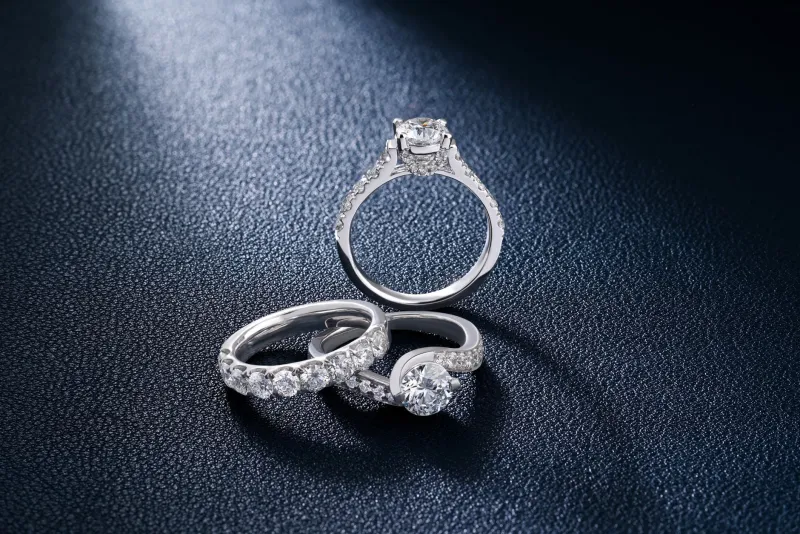
Budget conversations around engagement rings tend to be either vague or salesy. Rarely are they honest. So let's do something unusual: put real numbers on the table and follow three budgets through the 2025 American market, stone by stone, setting by setting.
A quick disclaimer before the math: prices vary by region, retailer, and the week's market conditions. Treat these figures as informed ballparks, not quotes.
What $5,000 Actually Buys
Five thousand dollars is the threshold where the lab-grown market becomes genuinely transformative.
Lab-grown diamond route: A 1.5 to 2.0 carat lab-ground round brilliant with excellent cut and VS clarity now sits comfortably within this budget, paired with a quality 14k or 18k gold solitaire setting. Five years ago, that same carat weight would have cost triple. This is the single biggest value shift in the modern bridal market.
Earth-mined diamond route: Expect a well-cut natural stone in the 0.70 to 0.90 carat range, likely in the G–I color band with VS or SI clarity. A half-carat-plus natural diamond with a tasteful pavé band is entirely achievable and remains the choice for couples who prioritize geological rarity.
Alternative stones: A fine sapphire — Ceylon blue, or a soft peach or teal — in the 1.5 to 2.5 carat range, set in platinum or gold, fits here. Moissanite delivers maximum sparkle for minimum spend, leaving room in the budget for a substantially upgraded setting.
The candid take: at $5,000, lab-grown offers the most visual impact per dollar, while natural offers the most narrative per dollar. Neither is wrong. But know which currency you're trading in.
What $10,000 Actually Buys
This is where choices become genuinely interesting rather than merely adequate.
Lab-grown: You're now in 3.0+ carat territory with premium color and clarity, plus a custom setting in platinum with accent stones. At this size, some couples consciously choose to go smaller than their budget allows — a 2-carat lab-grown stone plus a meaningful travel fund, for instance.
Earth-mined: A beautiful 1.0 to 1.3 carat natural round or an elongated 1.5-carat oval, G color or better, with a platinum setting and perhaps a hidden halo. This is the classic "serious ring" budget for mined stones, and it buys something genuinely heirloom-grade.
Alternative stones: A truly exceptional sapphire, emerald, or spinel — museum-quality color, certified origin — becomes available. So does a vintage or antique ring from the Art Deco or Edwardian eras, which is arguably the most distinctive $10,000 in the entire market.
What $15,000 Actually Buys
At this level, scarcity enters the conversation.
Earth-mined: A 1.5 to 2.0 carat natural diamond with D–F color and high clarity, set in a custom platinum design. This is heirloom territory — the ring a granddaughter studies under a loupe someday.
Lab-grown: Frankly, you'd have to try hard to spend this on a lab-grown stone alone. Most couples at this budget pair a substantial lab diamond with serious craftsmanship: hand-fabricated settings, rare cuts like asscher or Old European, or a full bridal suite including both bands.
Alternative and antique: Rare untreated sapphires, Kashmir-look spins, or signed vintage pieces from esteemed houses. For couples who want a ring no one else will ever have, this budget outperforms any diamond listing.
The Two Months' Salary Rule Is Dead — Let It Rest
The origin of the "two months' salary" guideline is not tradition; it is a 1930s advertising campaign, later doubled to three months by the same industry. It was always marketing, and today's couples have largely stopped pretending otherwise.
What we observe in our own consultation rooms: couples increasingly frame the ring as one line in a larger life budget. A $10,000 ring and a $6,000 honeymoon. A $6,000 ring and a beefed-up house down payment. Some allocate savings toward a future child, a business, or simply breathing room in a high-cost economy.
This is not a lowering of standards. It is a maturing of priorities. The couples who seem most content with their rings are rarely the ones who spent the most — they're the ones who spent deliberately, with full agreement between partners, and without a credit card statement haunting the honeymoon.
Three Questions That Matter More Than the Number
- Will she love looking at it every day for thirty years? Cut quality and personal style outperform carat weight in long-term satisfaction.
- Does this number create stress or security? A ring should mark a beginning, not a burden.
- Are we choosing for ourselves or for an audience? Instagram is not a stakeholder in your marriage.
Whatever your number — $3,000 or $30,000 — the best ring is the one chosen with open eyes, honest math, and a partner who knows exactly why it matters.