The Second Ring: How Modern Grooms Are Claiming Their Place in the Engagement Story
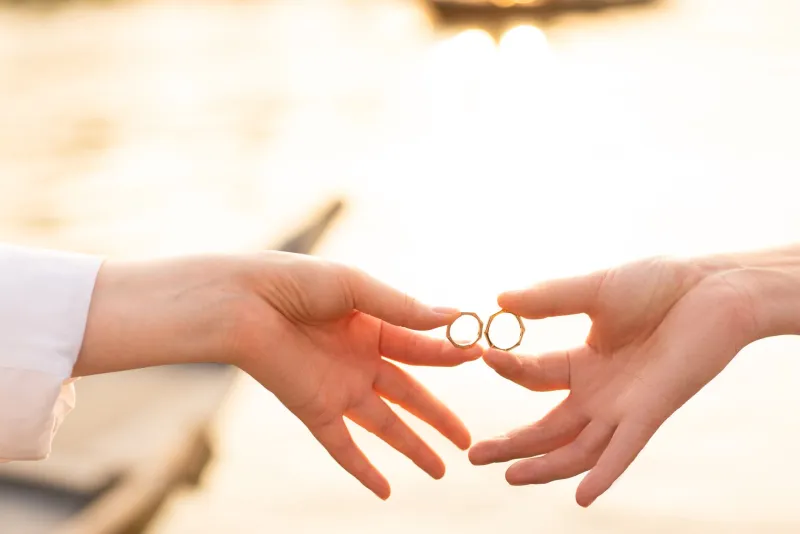
For generations, the American engagement narrative has tended to travel in one direction: a proposal, a ring presented to one partner, and a wedding band exchanged later by both. That narrative is not disappearing, but it is widening. In 2026, more grooms are asking a simple and entirely reasonable question: if engagement is a shared commitment, why should its most visible symbol belong to only one person?
The answer is increasingly personal rather than political. Some men want a ring because they admire the design language of fine jewelry. Others want a daily reminder of a promise they have made. Many couples simply find that two rings tell a more honest story than one. The rise of men’s engagement rings is less a rejection of tradition than an expansion of it, and like any meaningful change in bridal jewelry, it rewards thoughtful planning.
A Shift in the Symbol, Not a Reversal
A men’s engagement ring is not a new invention. Historical records show that men have worn signet rings, commitment rings, and betrothal bands in various cultures for centuries. What feels new in 2026 is the mainstream comfort with the idea. Jewelers are designing more options for men, couples are discussing the question earlier, and families are encountering a choice that may not have appeared in their own engagement stories.
That last point matters. A ring worn by a groom can prompt questions from parents or relatives who associate engagement jewelry exclusively with the bride. The most effective response is usually not debate but context. A couple can explain that the second ring is not a replacement for the wedding band; it is a marker of the engagement season itself. It can be worn daily, worn occasionally, or kept as a private token. The couple defines its role.
Why Couples Are Choosing a Second Ring
The motivations vary as much as the couples themselves. Some grooms want visible parity. They may have proposed, or they may have been proposed to, and they want a symbol that reflects their own commitment. Others are drawn to the aesthetics: a well-made band in platinum or gold can feel natural to a man who already wears a watch or a signet ring. A smaller group sees the engagement ring as a future heirloom, something to pass down alongside the bride’s pieces.
There is also the question of the proposal itself. When one partner plans a surprise, the other may later want a ring to mark the moment. In other couples, both partners choose rings together after the engagement, treating the process as a shared design project rather than a unilateral gift. Neither approach is more romantic than the other; what matters is that the choice feels authentic to the people wearing the rings.
Minimal Bands, Statement Stones, and the Spectrum Between
The design market for men’s engagement rings now spans a broad range. At one end sits the minimalist band: a plain or subtly textured ring in platinum, white gold, yellow gold, or palladium. These designs appeal to grooms who want something understated, durable, and easy to wear alongside a wedding band. A comfort-fit interior and a modest width often make the difference between a ring that is worn and one that stays in a drawer.
In the middle of the spectrum are bands with intentional details: a brushed finish, a narrow channel of diamonds, a hidden engraving, or a single small stone set into the interior. These designs offer personality without demanding attention. They can be especially useful for grooms who work in conservative environments or who prefer jewelry that reads as a private signal rather than a public statement.
At the more expressive end are statement rings with larger stones, mixed metals, or sculptural forms. These are not for every groom, but they are no longer unusual. A man who wears jewelry regularly may find that a substantial ring suits his existing style. The key is proportion: a ring should feel balanced on the hand, not merely impressive in a photograph.
Navigating Family Expectations With Grace
Family reactions can be unpredictable. Some parents will be delighted; others may need time. A couple can prepare by deciding in advance how much explanation they wish to offer. In many cases, a brief and confident statement is enough: this is a choice the couple has made together, and it reflects their understanding of commitment.
It can also help to separate the engagement ring from the wedding band in family conversations. The wedding band remains the traditional exchange for many couples. A groom’s engagement ring is an additional layer, not a substitution. Framing it that way can reassure relatives who worry that a meaningful custom is being discarded.
Budgeting for Two Rings Without Losing the Plot
A second ring changes the arithmetic. Couples who had planned for one engagement ring and two wedding bands may now be considering three pieces instead of two. The sensible approach is to revisit the total jewelry budget before design begins. A groom’s engagement ring does not need to match the bride’s ring in cost, and it should not be treated as a scorecard. What matters is that the couple agrees on a comfortable range and allocates resources according to what each person will actually wear.
In 2026, many couples are choosing to simplify elsewhere, such as reducing the wedding band budget or selecting a design that can later serve as the wedding band itself. Others treat the groom’s ring as a milestone purchase made after the wedding, when the financial pressure of the day has eased. There is no single correct sequence.
Matching, Contrasting, and Finding a Shared Visual Language
Couples often ask whether their rings should match. The answer depends on what “match” means. Exact matching can feel too uniform, especially when the bride’s ring is delicate and the groom’s ring is broad. A more successful approach is to share a visual language: the same metal, a similar finish, a repeated texture, or a complementary stone color. The rings can then read as related without becoming twins.
Contrast can be equally effective. A yellow gold groom’s band beside a platinum bride’s ring can look intentional rather than discordant if the couple has chosen the metals deliberately. The goal is coherence, not duplication.
Sizing and Fit: The Details That Decide Whether It Gets Worn
Men’s rings often fail for practical reasons rather than aesthetic ones. Width, weight, and interior shape matter. A ring that is too wide can feel intrusive; one that is too narrow may feel insubstantial. Comfort-fit interiors are common for good reason, but they can affect sizing, so a professional fitting is essential.
Grooms should also consider their daily routines. A ring worn during manual work may need a more durable finish or a design that resists scratches. A ring worn only on special occasions can be more delicate. Couples should discuss these realities early, before the design is finalized.
Making the Moment Authentic
A groom’s engagement ring does not require a second proposal or a staged reveal. It can be presented privately at home, chosen together after the engagement, or exchanged during a quiet dinner. The moment should suit the couple, not a script.
What matters most is that the ring feels like a genuine expression of commitment rather than a trend adopted for appearance. When a groom wears a ring because it carries meaning for him and for his partner, the piece becomes what fine jewelry is meant to be: a lasting record of a shared decision.
The Takeaway
The rise of men’s engagement rings in 2026 is a reminder that tradition is not a fixed object. It is a conversation carried forward by each generation. Couples who approach that conversation with honesty, patience, and attention to design will find that a second ring does not complicate the story. It completes it.