A Symbol Built for Both of You: Honoring Your Partner's Comfort When Jewelry Isn't Their Language
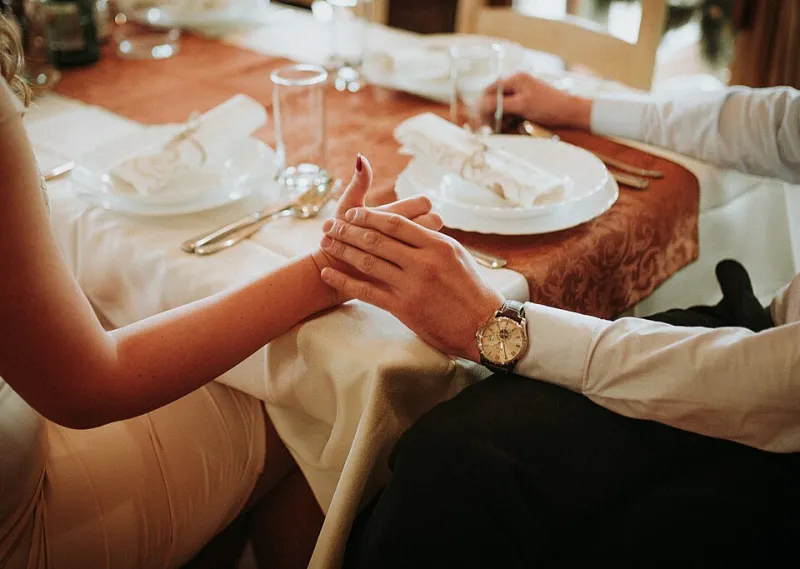
Photo: Shixart1985, CC BY 2.0, via Wikimedia Commons
The wedding band has been a near-universal symbol of commitment across Western culture for so long that it can feel less like a tradition and more like a given—an assumption so embedded in the ritual of marriage that questioning it seems almost beside the point. And yet, for a meaningful number of couples, one partner simply does not wear jewelry. Not as a statement. Not as a rejection of the relationship's significance. Simply because jewelry has never been part of how they move through the world.
This is more common than the wedding industry tends to acknowledge. The person who has never worn a watch, who removes any ring within hours of putting it on, who finds the sensation of metal against their skin distracting or uncomfortable—this person exists in many relationships, and they deserve a thoughtful approach to their wedding jewelry rather than a resigned compromise or a purchase that will spend most of its life in a drawer.
At Sonia Jewellery & Bridal, we believe that the most enduring symbols of commitment are the ones both partners genuinely want to carry. When one partner does not connect with conventional jewelry, the answer is not to override that reality. It is to get creative within it.
Understanding Why It Matters—and Why It Doesn't Have To Look One Way
Before exploring alternatives, it is worth sitting with the question of why this matters at all. For many couples, the exchange of rings carries profound ceremonial weight—the moment of mutual visible commitment, the object that the world can see and recognize as evidence of a shared life. If one partner does not wear their ring, or wears it reluctantly, that weight can feel unevenly distributed.
But the function of a wedding symbol is not to satisfy external observers. It is to mean something to the two people who chose it. A ring worn begrudgingly communicates nothing more meaningful than compliance. A symbol chosen deliberately—even if it looks nothing like a ring—communicates exactly what a wedding symbol is supposed to: that this person chose this relationship, and wanted a way to carry that choice with them.
The conversation between partners about what that symbol should be is, in itself, an act of intimacy. Approach it as such.
Beginning the Conversation With Honesty and Without Pressure
For the partner who does not wear jewelry, the most important thing is to feel heard rather than managed. If the conversation begins from a position of finding a way to get them to wear a ring anyway—just a thinner one, just a different metal, just for special occasions—it is not actually a conversation about their comfort. It is a negotiation toward a predetermined outcome.
A genuine conversation starts with questions. What is it about jewelry that feels uncomfortable or misaligned? Is it physical sensation, aesthetic preference, professional context, or something else entirely? Is there any type of object or symbol that does resonate with them? What does commitment look like to them when they imagine carrying it visibly?
The answers to these questions will shape everything that follows. And they may surprise you. The partner who has never worn a ring may feel strongly about a different kind of symbol—one that has simply never been offered as an option.
Minimalist Ring Designs Worth Considering
For partners whose resistance to jewelry is primarily about aesthetics or conspicuousness rather than physical sensation, a minimalist ring design may resolve the tension entirely.
A flat, thin band in a matte finish reads more like a functional object than an ornament—and for some people, that distinction matters enormously. Comfort-fit bands, which are rounded on the interior, significantly reduce the sensation of wearing a ring for those who find flat-interior bands distracting. Alternative materials—tungsten, titanium, silicone, or even wood—can feel and look entirely different from traditional precious metals and may align better with a partner's existing relationship with the objects they wear.
A ring that is worn consistently, even if it is deliberately understated, is infinitely more meaningful than a traditional band that remains in a jewelry box. If minimalism is the path to genuine daily wear, minimalism is the right design.
Symbolic Alternatives to the Ring
For partners for whom no ring design will feel natural, the field of options is considerably wider than the wedding industry typically presents.
Tattoos. A small, meaningful tattoo on the ring finger—or anywhere else—has become a genuinely popular choice for couples who want a permanent, physical symbol of commitment that requires no maintenance and cannot be removed at the end of a workday. The design can be as simple as a line, a date, or a single meaningful symbol shared between partners.
Engraved or personalized objects. A watch, a pocket knife, a pen, a compass—any object that a partner already carries or uses daily can be customized with an engraving that makes it a private symbol of commitment. The object becomes a kind of ring by another name: something worn or carried, chosen deliberately, and imbued with the specific meaning of this relationship.
A piece of jewelry worn differently. A partner who does not wear rings may be entirely comfortable with a necklace, a bracelet worn occasionally, or a cufflink set. Thinking beyond the finger opens significant creative territory, and a custom jeweler can create pieces in any of these forms that carry the same design language as the other partner's bridal suite.
A shared object. Some couples choose a single object—a book, a piece of art, a custom-made item—that lives in their home and serves as a shared symbol rather than an individual one. This approach emphasizes the shared life over the individual declaration, and for some couples it feels more honest to who they are.
Designing Around Both Partners With Equal Intention
Whatever form the non-ring symbol takes, the design process should be approached with the same seriousness and care as the engagement ring or wedding band. This is not a workaround. It is a design brief—one that asks: what object or symbol, created with craft and intention, will mean to this person what a ring means to someone else?
Bring that question to your jeweler or maker with specificity. Describe the partner's aesthetic, their daily life, the materials they are drawn to, and the meaning you want the symbol to carry. The result should feel as deliberate and as personal as any piece in your bridal suite—because it is.
A marriage is, above all else, a relationship between two specific people. The symbols you choose to mark it should reflect both of you—not the version of you that fits most comfortably into a convention, but the actual people who said yes to each other. When both partners carry a symbol they genuinely chose, the commitment it represents is visible in the truest sense: not to the world, but to each other.